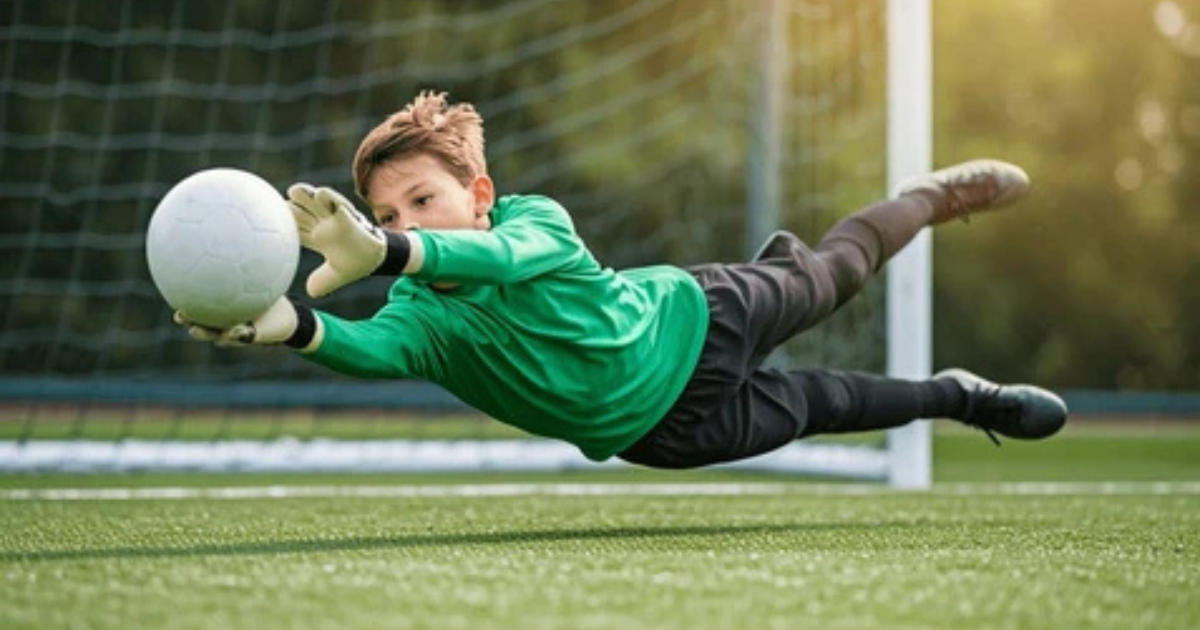
Once upon a time, goalkeeping practice meant diving drills, reaction saves, and muddy gloves. Today, it also means virtual reality headsets, AI-powered gloves, and motion-tracking sensors.
The “keepers’ union” — long celebrated for instinct and bravery — is now embracing science and data to gain split-second advantages. From grassroots to elite academies, technology is transforming how goalkeepers train, learn, and perfect their craft.
1. Virtual Reality: Seeing the Game Before It Happens
Virtual reality (VR) has become one of the most revolutionary tools in modern goalkeeper training. Systems such as Rezzil, GoalkeeperVR, and Sense Arena allow players to experience realistic match scenarios without setting foot on a pitch.
Using a headset and controllers, goalkeepers can simulate shots, crosses, or one-on-one situations in a fully immersive 360-degree environment. Coaches can recreate specific game moments — a penalty save, a defensive breakdown, or a last-minute corner — to train the keeper’s reading of play and reaction time.
The big advantage? VR eliminates physical fatigue and risk of injury while allowing endless repetition of decision-making scenarios. Young keepers can “see” hundreds of match situations in a single session, accelerating their ability to anticipate rather than simply react.
2. Motion Sensors and Biomechanics
Beyond simulation, technology is also providing hard data on how goalkeepers move.
Smart clothing and motion sensors — often worn in vests, gloves, or boots — capture micro-movements, jump height, dive speed, and landing impact. Systems like Catapult, Xsens, and Statsports translate these readings into precise analytics that help coaches fine-tune performance.
For example:
-
A sensor may show a keeper’s dive angle is consistently too low, wasting milliseconds on the ground.
-
Data might reveal asymmetry between left and right-side dives, guiding targeted strength training.
Biomechanical insight helps prevent injuries and ensures movements are as efficient as possible. In a position where milliseconds separate glory from defeat, those fractions truly count.
3. Smart Gloves and Haptic Feedback
Manufacturers are also pushing innovation into equipment itself. Some prototypes now feature pressure sensors in gloves, measuring catching technique and grip strength. Others include haptic feedback, where tiny vibrations signal if the correct catching area was used.
For younger players especially, this kind of instant feedback accelerates muscle memory. Instead of waiting for coach review, the gloves themselves act as a digital coach — correcting technique in real time.
4. Video Analysis and AI Coaching
While match footage analysis has existed for years, artificial intelligence now makes it far more powerful. AI-driven software like Spiideo, Hudl, or Veo automatically tracks positioning, footwork, and reaction sequences. Coaches can instantly break down each save attempt, annotate clips, and measure improvements over time.
Some academies have introduced AI-powered goalkeeping assistants that analyse decision-making frame by frame. For instance, if a keeper tends to step forward too late on crosses or hesitates during one-on-ones, the software identifies those patterns automatically.
These insights take the guesswork out of coaching. Instead of vague advice (“get off your line quicker”), players see exactly when and where adjustments are needed.
5. Data Meets Psychology
Goalkeeping is as mental as it is physical. Modern tools are now pairing analytics with cognitive and psychological training.
Neuro-tracking headbands measure focus levels during drills, helping keepers train their concentration under pressure. Eye-tracking systems record how long they fixate on the ball, opponents, or teammates — revealing whether they’re reading play efficiently.
In top academies, this data feeds into tailored routines designed to reduce stress, improve decision-making speed, and boost confidence during high-pressure moments — like penalty shootouts.
6. The Human Touch Still Matters
Despite the tech revolution, traditional coaching still reigns supreme. No sensor can replicate a coach’s intuition or the instinct gained from live match experience.
Technology is best seen as a tool, not a replacement — helping coaches understand, measure, and refine what great goalkeepers already do naturally.
The best results come when data and intuition work together: the numbers reveal the “how,” while human experience explains the “why.”
Final Whistle
From VR simulations to motion sensors and AI analysis, technology is giving goalkeepers unprecedented insight into every dive, save, and decision. The position once defined by reflexes and courage is now at the cutting edge of sports science.
For your blog readers — whether aspiring players, coaches, or fans — one thing is clear: the goalkeeping revolution is already here. The next great save might not just be down to instinct — but to the invisible data shaping every fingertip stop.