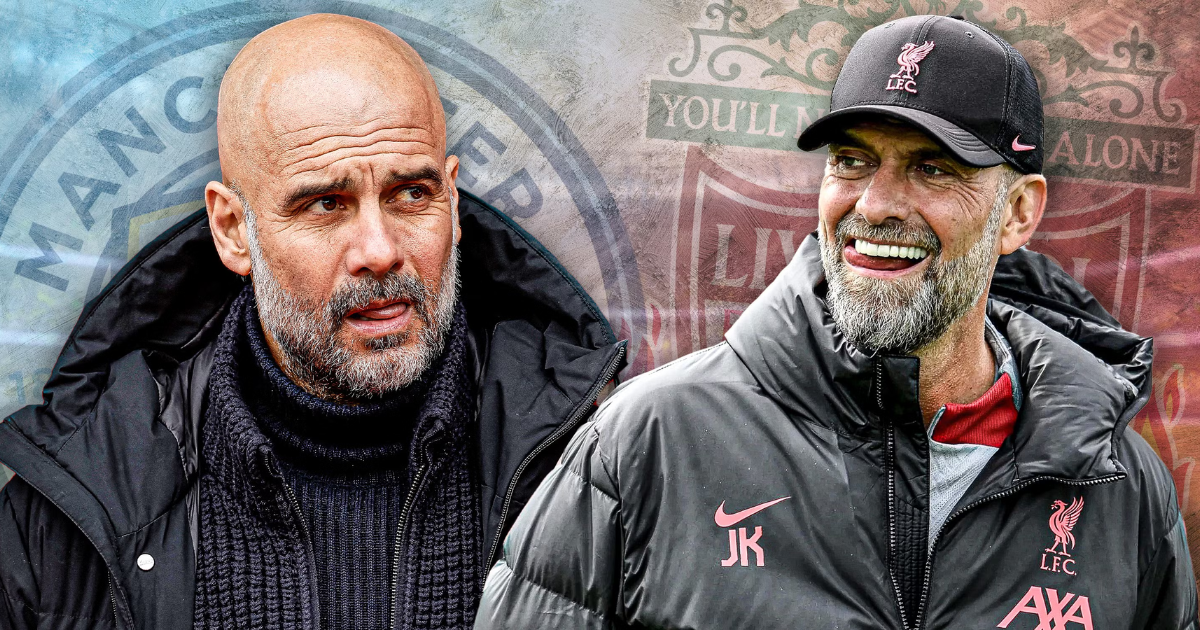
In modern football, few managerial rivalries have defined the game like Pep Guardiola and Jürgen Klopp. Their tactical philosophies — possession-based control versus high-intensity pressing — have not only influenced their teams but reshaped global football thinking. While both managers chase perfection, they do it through very different paths.
Pep Guardiola: The Master of Positional Play
Pep Guardiola’s football is built on control, precision, and structure. From his early Barcelona days to Manchester City, his philosophy — often referred to as “Juego de Posición” (positional play) — revolves around dominating possession and dictating tempo.
Key Traits of Guardiola’s Style:
-
Ball Possession & Patience: His teams often maintain 60–70% possession, recycling passes to find openings.
-
Positional Discipline: Each player occupies specific zones to stretch the opposition and create passing triangles.
-
Build-up from the Back: Goalkeepers and defenders act as playmakers to draw opponents in and open spaces.
-
Tactical Flexibility: Pep constantly experiments — from false nines to inverted full-backs — to maintain unpredictability.
The Goal:
Guardiola’s sides aim to control every phase of the game. Scoring is a byproduct of relentless passing, movement, and patience until the perfect moment appears.
Jürgen Klopp: The Master of Gegenpressing
In contrast, Jürgen Klopp’s football thrives on energy, emotion, and chaos. His famous philosophy, “Gegenpressing” (counter-pressing), involves winning the ball back immediately after losing it. For Klopp, defending and attacking start with intensity.
Key Traits of Klopp’s Style:
-
High Pressing: Teams swarm opponents to force turnovers high up the pitch.
-
Vertical Transitions: Fast attacks through direct passes and pacey forwards.
-
Work Ethic & Team Unity: Every player contributes defensively; pressing is collective, not individual.
-
Emphasis on Emotion: Klopp motivates his players with passion and unity — football as a “feeling,” not just a tactic.
The Goal:
Klopp’s teams aim to disrupt and overwhelm. Instead of controlling the game through possession, they dominate through aggression, tempo, and mental strength.
Key Tactical Differences
| Aspect | Pep Guardiola | Jürgen Klopp |
|---|---|---|
| Philosophy | Control through possession | Dominate through pressing |
| Tempo | Slow, methodical build-up | Fast, explosive transitions |
| Shape | Positional discipline and spacing | Fluid and reactive pressing blocks |
| Defensive Style | Possession as defense | Counter-pressing after loss |
| Attacking Focus | Creating overloads and triangles | Exploiting spaces and turnovers |
| Player Roles | Inverted full-backs, false nine | Dynamic wingers, attacking full-backs |
Both managers seek control — Pep through the ball, Klopp through pressure. Their approaches reflect two sides of the same coin: different methods, one goal — dominance.
Impact on Modern Football
Guardiola and Klopp’s philosophies have spread far beyond their clubs.
-
Pep’s Influence: Inspired a generation of coaches emphasizing ball retention, structure, and positional intelligence (e.g., Arteta, Xavi, De Zerbi).
-
Klopp’s Legacy: Sparked a new wave of high-pressing teams (e.g., Nagelsmann, Postecoglou, Ten Hag).
Together, they’ve shaped football’s tactical evolution — blending intelligence with intensity.
The Players That Define Their Systems
-
Pep Guardiola: Kevin De Bruyne, Rodri, Bernardo Silva, and John Stones — all technically gifted, tactically versatile, and comfortable under pressure.
-
Jürgen Klopp: Mohamed Salah, Virgil van Dijk, Trent Alexander-Arnold, and Jordan Henderson — leaders with energy, pace, and relentless drive.
Each manager builds around players who reflect their identity, making their squads extensions of their philosophies.
Final Thoughts
Pep Guardiola and Jürgen Klopp represent two distinct football ideologies — one built on control and structure, the other on intensity and emotion. Yet, both have achieved extraordinary success because their methods suit their personalities and inspire total belief from their players.
Football thrives on diversity, and this rivalry shows that there isn’t one perfect way to win — just the perfect balance between tactics, passion, and philosophy.